
Sarah McLean
,
Lead Content Manager
Author
, Published on
August 18, 2026
No items found.



Smart Fleet Management integrates helicopter tracking, reporting, and performance analysis.
.jpg)
Marine coordinators have long had to manage vessels on one screen and helicopters on another. This visibility gap leads to reporting errors, over-complicated scheduling and less efficient operations.
But now, Spinergie Smart Fleet Management (SFM) offers helicopter integration as part of an expanded offshore logistics offering. While aligning with the operational, regulatory, and contractual requirements of the industry, it also minimises the manual workload for onshore and offshore teams.
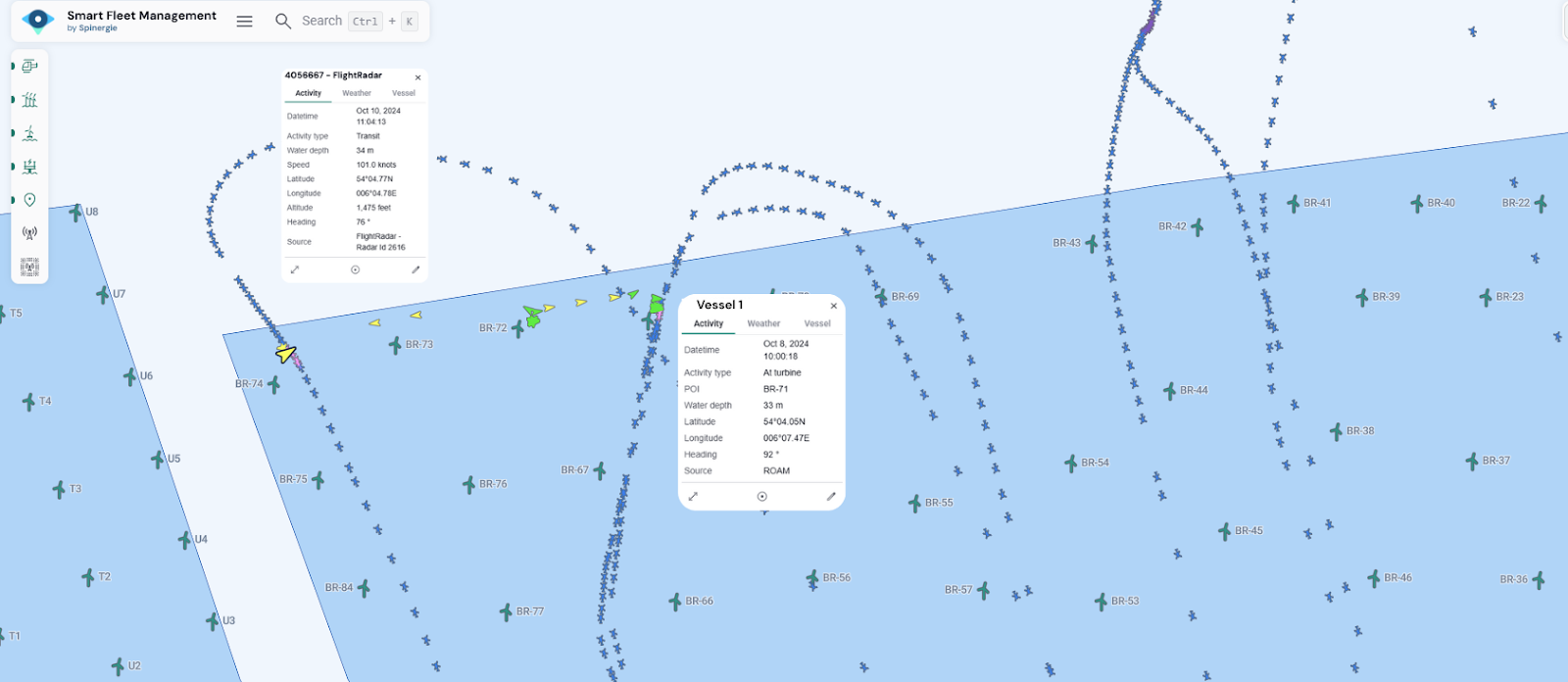
A layerable, intuitive map acts as single source of truth for understanding, monitoring, and explaining helicopter and vessel operations.
Centralising air and sea telemetry within a single map interface ensures complete situational awareness, removing the operational blind spots created by toggling between different systems.
SFM integrates parallel helicopter and vessel streams into a cohesive operational picture. From the map interface, your team gains a comprehensive view of live asset positions, flight and sail paths, and historical activity. These can be layered with active oil and gas or offshore wind project sites, nearby operations, and other critical infrastructures.
Further enrichment comes from real-time weather overlays, forecasts, and customisable geofencing. By defining restricted routes or sensitive channels, the system ensures that operational risks are identified and mitigated in real-time.
Monitoring is further streamlined through colour-coded helicopter telemetry to distinguish between mission phases: transit, hovering, and landing. High-fidelity tracking extends to Search and Rescue (SAR) and emergency response units, providing an essential safety layer for offshore wind assets and other maritime environments.
When post-mission analysis is required, contextualised historical replays provide an auditable record of operations.

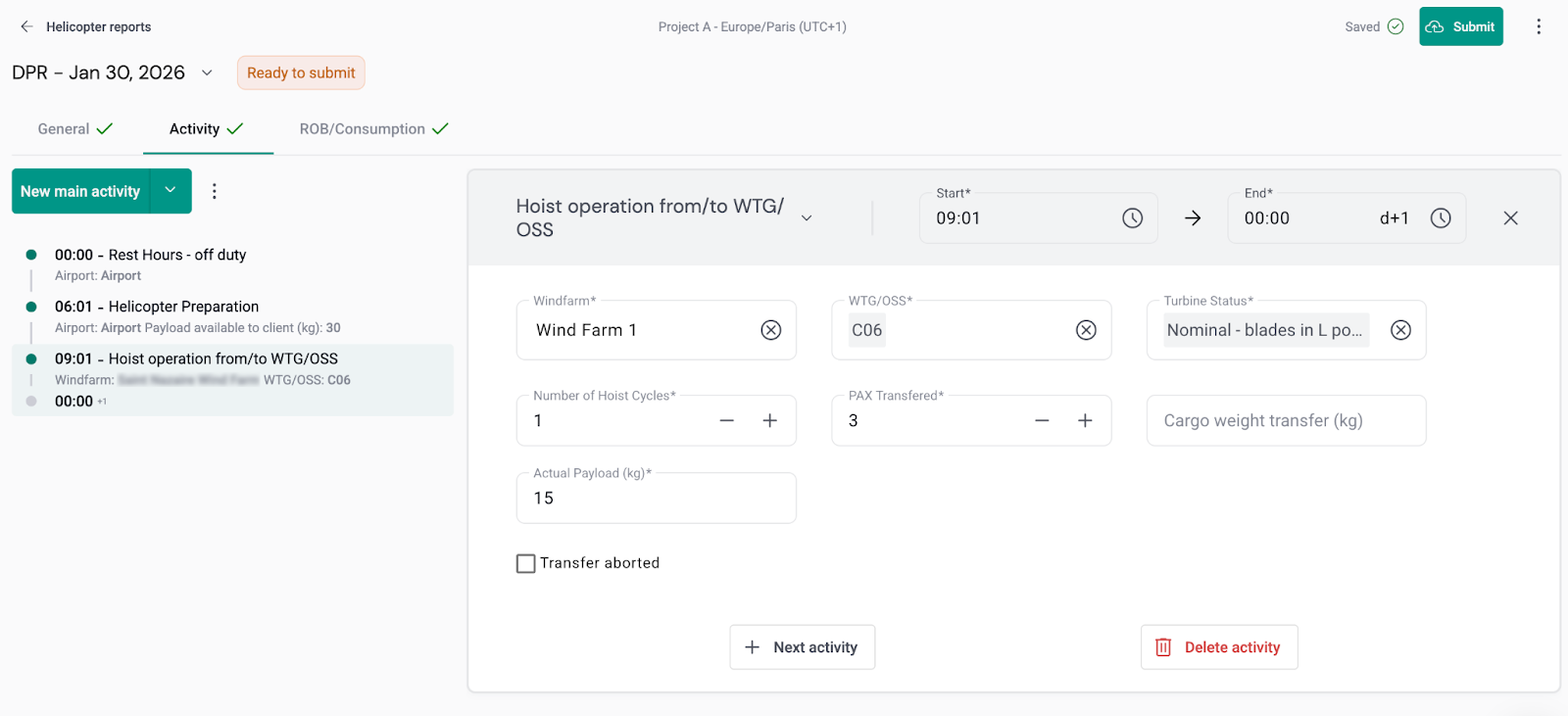
A customised reporting workflow, backed by validated, automated data that reduces effort while increasing clarity, trust and auditability across your helicopter operations.
Reporting is one of the most time-consuming aspects of both helicopter and vessel operations. Our re-engineered, single entry Daily Progress Report (DPR) system harmonises helicopter and vessel reporting while eliminating redundant data entry. The platform aligns with specific client requirements through configurable layouts, allowing your team to spend less time formatting reports and more time running operations.
Centralising operational and contextual data creates a transparent “single source of truth” for both operators and clients. Shared visibility strengthens the line of communication and provides a solid record of operational logic. This may include documented justifications for weather delays, maintenance requirements, or “No Fly” decisions. With all reports, supporting documentation, and digital sign-offs housed in one auditable location, your operations remain traceable, accessible, and fully compliant.
SFM consolidates a wide array of data streams into the reporting environment, including:
This flexibility allows you to prioritise the data sources required for specific contractual or regulatory compliance needs.
Built-in validation performs automated quality checks with the option for manual input or annotation when correction or more explanation is required. This combination ensures that only clean, reliable data reaches your analytical and verification dashboards.
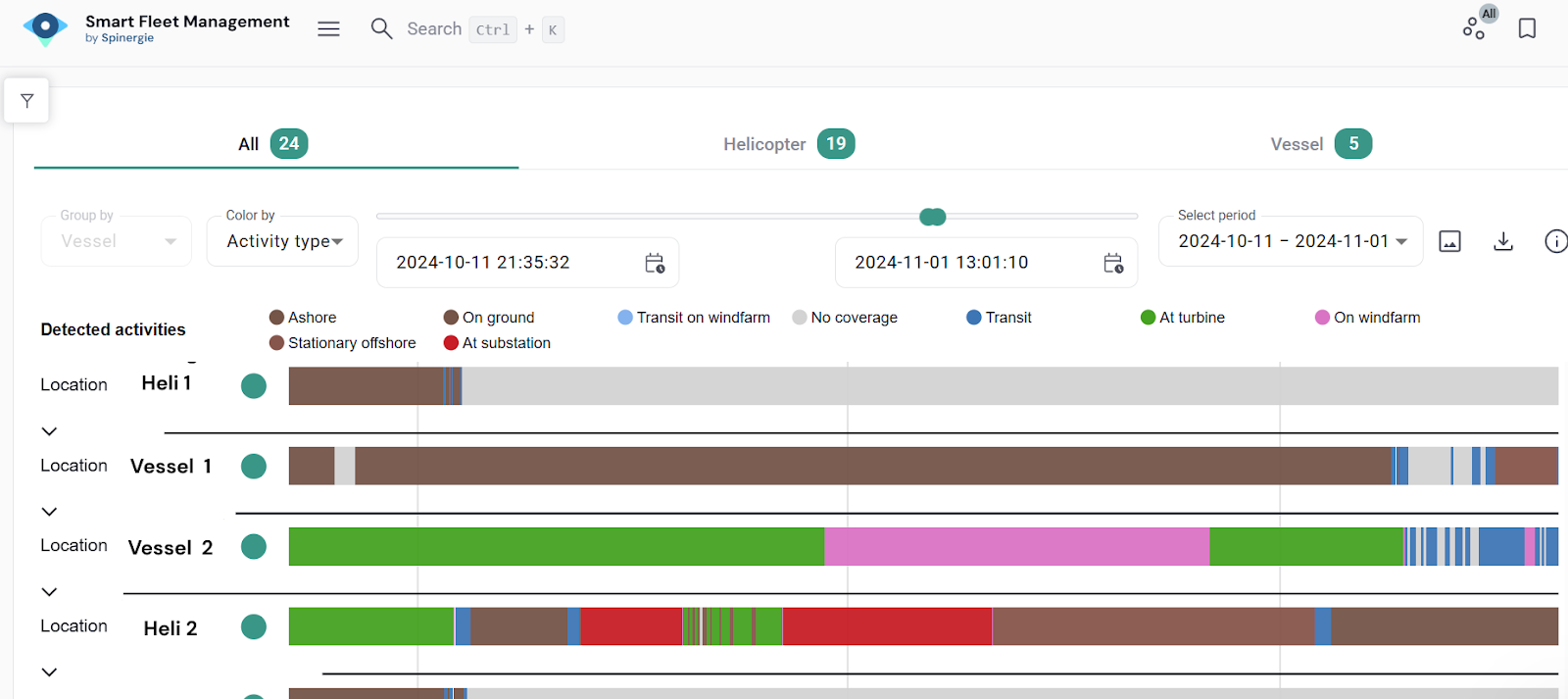
A consistent view of helicopter and vessel performance to support planning, oversight, and contract management.
With a robust data foundation in place, SFM’s customisable KPI dashboards help you turn that information into practical steps for improvement. By categorising metrics according to your specific requirements (such as by individual project or helicopter provider) you ensure a solution that is relevant to your operations or individual user needs.
The platform tracks performance trends over time which helps you to establish benchmarks, monitor progress against contractual requirements and identify emerging inefficiencies before they become issues.
Selected KPIs may include:
Helicopter and vessel performance can be shown side-by-side to ensure a synchronised logistics chain. With a unified analytical view, you have the objective data necessary to support long-term planning and proactive contract management.
One coordinated schedule for helicopter and vessel operations, supported by live tracking, manifest management, and integrated reporting.
Managing disjointed sea and air schedules can be a source of operational friction. SFM mitigates this by integrating vessel rotations, helicopter flight planning, and comprehensive manifest management into a single dashboard. This helps simplify coordination across all offshore logistics, ensuring the perfect alignment of air and sea operations.
By viewing upcoming vessel arrivals and flight windows side-by-side, your coordination team can build more effective manifests to optimise personnel and cargo transfers. Furthermore, because scheduling is integrated with live tracking, the system provides real-time visibility into active operations. This allows you to anticipate potential delays and adjust plans to keep projects on track.
With built-in reporting, claims support, and KPIs, SFM provides the transparency required for smoother logistics operations, reduced asset downtime, and verified performance across your offshore projects.
Ready to see the full picture? Book a demo to see how integrated helicopter management can help reduce asset downtime and provide total oversight of your offshore logistics.
.jpg)
.jpg)