.webp)
Eloïse Ducreux
,
Offshore Sustainability Analyst
Author
, Published on
August 18, 2026
No items found.



OSV specifications are shaped by shifting global cycles and regional operating needs, with AHTS defined by power and PSVs by deck area. In this article, offshore energy analyst Eloïse Ducreux explores how these dynamics have influenced fleet design and demand across offshore markets.
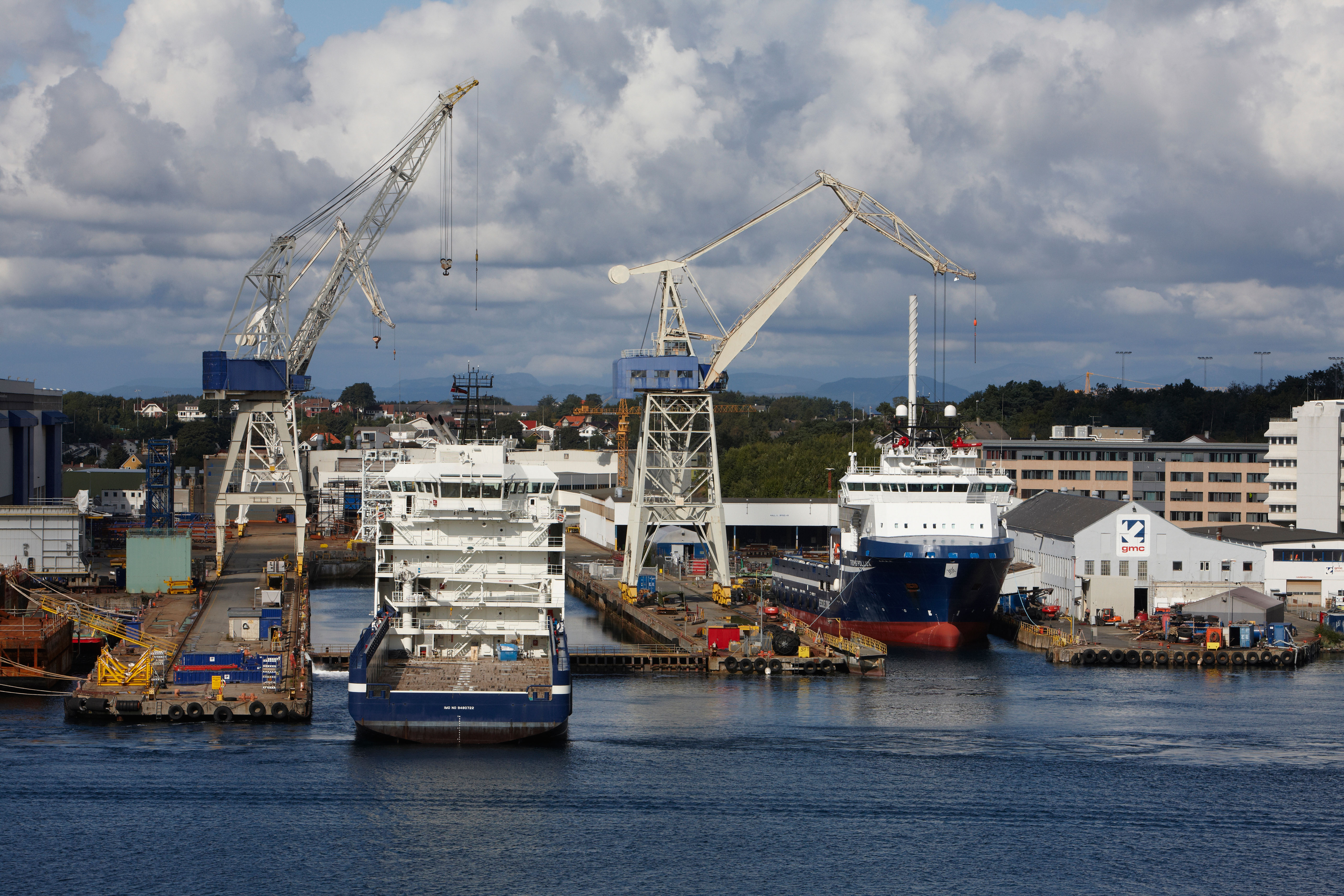
Anchor Handler Tug Support (AHTS) and Platform Supply Vessels (PSV) are designed to handle a variety of offshore activities, and have a wide range of specifications to match. No one single design fits all vessels.
AHTS are defined by their installed power, which drives their core missions: anchor handling, towing and subsea deployment. These tasks require high bollard pull and strong maneuvering capabilities. Power ranges extend up to 24 MW, with wide variation reflecting differing operational demands and weather constraints.
In contrast, PSV are shaped by cargo-carrying, making deck area the critical constraint. Designs range from compact 200m² units for routine supply runs to large 1,300 m² vessels for heavy logistics in harsher environments.
In this blog post, we share how regional and global market dynamics have shaped the fleet as it is today.
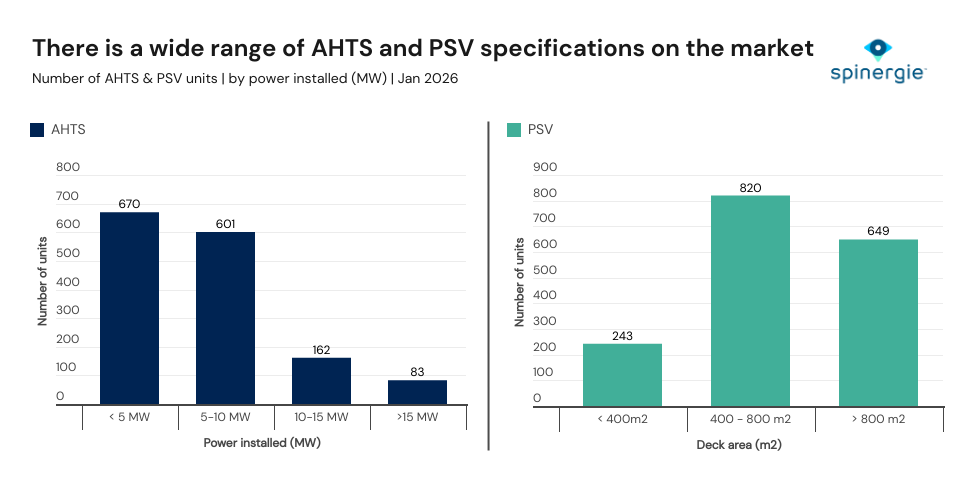
Over the course of the past two decades, the AHTS fleet has developed to follow the needs of the market from the last big oil and gas (O&G) boom to today’s growing offshore wind sector.
Since 2020, 74 AHTS have been delivered, with 45% built for the Middle East. As a region with milder sea states, high-power vessels are not required for heavy anchor-handling campaigns. This means that once again, vessels below 10 MW are dominating, as was the case prior to 2008.
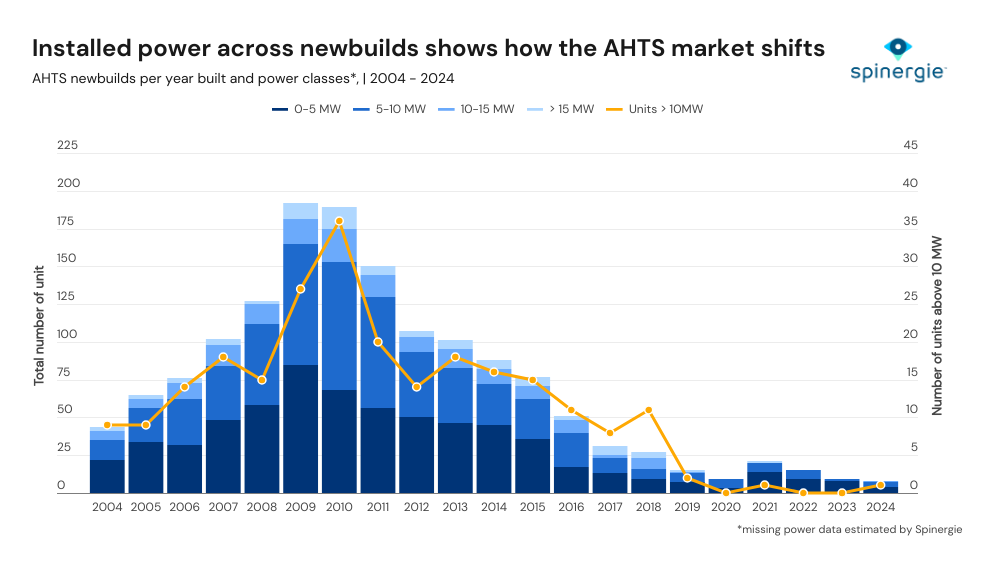
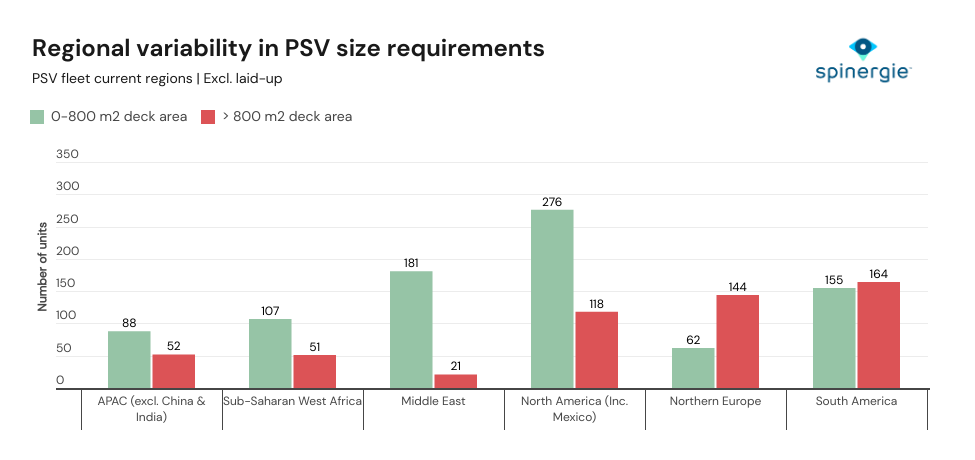
Regional requirements also influence PSV design. In the chart below, the regional fleet distribution by deck area indicates a clear concentration of heavy PSVs in South America and Northern Europe. These two regions sustain structural demand for larger vessels due to long-cycle subsea work and harsher weather.
Meanwhile, other basins rely more on lighter PSVs with smaller deck areas. This reflects the shorter project scopes in these regions, alongside more fragmented activity, and lower structural requirements for heavy units.
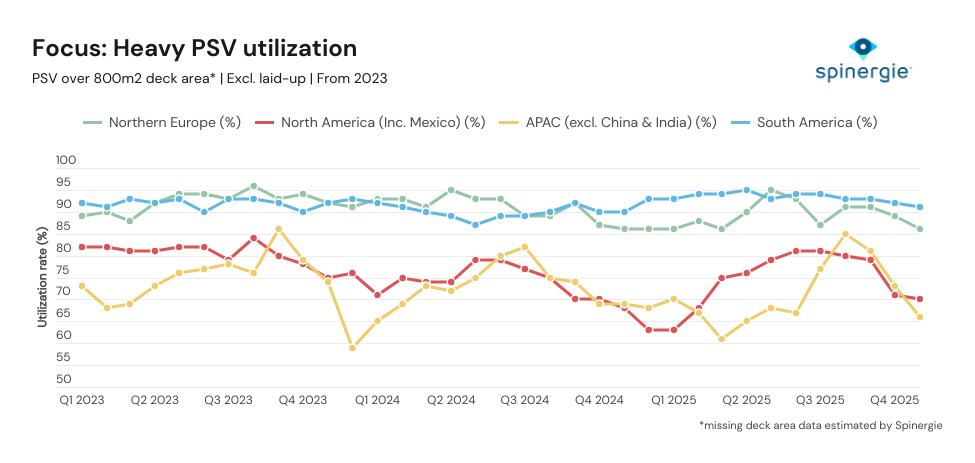
Europe and South America are the main high-demand basins for heavy PSVs, with utilization near or above 90%.
North America and APAC show more volatile utilisation, with more fragmented fleets and wider variation in vessel size.
Public vessel data is frequently unavailable, with a significant share of AHTS and PSV owners not disclosing complete specifications for their fleets. By missing key design features like installed power, bollard pull, and deck area, it can be difficult to undertake consistent capability across vessels. This reduces visibility for charterers, owners, and regulators, who rely on technical data to assess vessel performance.
Yet, because design parameters follow stable relationships across the fleet, it is possible to allow for accurate data estimations, as undertaken by Spinergie. To find out more about how you can access our OSV data, including monthly reports, request a free demo.