
Hélia Briaud
,
Subsea Cable Analyst
Author
, Published on
August 10, 2026
No items found.



Multi-Purpose Interconnectors (MPIs) are reshaping offshore energy infrastructure by combining wind farm grid connections with cross-border electricity trading in a single subsea cable system. Spinergie Subsea Cable Analyst, Hélia Briaud, details how MPIs could become a defining feature of the offshore power cable market.
.jpg)
Multi-Purpose Interconnectors (MPIs) are emerging as a more efficient way of building offshore energy infrastructure. By combining offshore wind grid connection with cross-border electricity trading in one asset, MPIs promise better utilisation, fewer coastal landfalls, and more flexible power flows between national markets.
Here, Spinergie Subsea Cable Analyst, Hélia Briaud breaks down what MPIs are, the current project pipeline, the market forces accelerating their development, and how the interconnector and offshore wind export cable value chains increasingly overlap.
Multi-Purpose Interconnectors (MPIs), also referred to as Offshore Hybrid Assets, are subsea power cables that combine two functions within a single infrastructure. They connect offshore wind generation to shore, and also facilitate cross-border electricity trading between national grids.
Unlike conventional connections, an MPI allows power to flow dynamically to whichever market offers the highest demand. This improves infrastructure utilisation and reduces the number of individual coastal landfalls required.
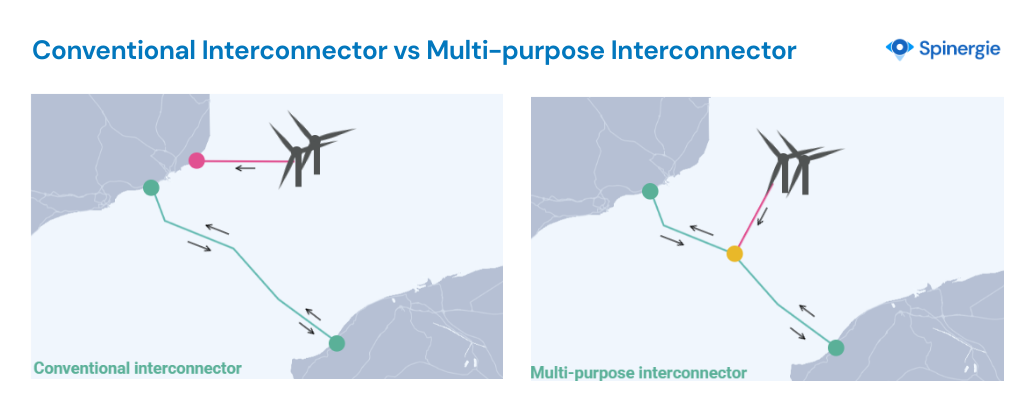
Only one MPI has been commissioned to date: the Kriegers Flak Combined Grid Solution, which entered service in 2019 and links the Danish Kriegers Flak wind farm to the German Baltic 1 and Baltic 2 platforms in the Baltic Sea.
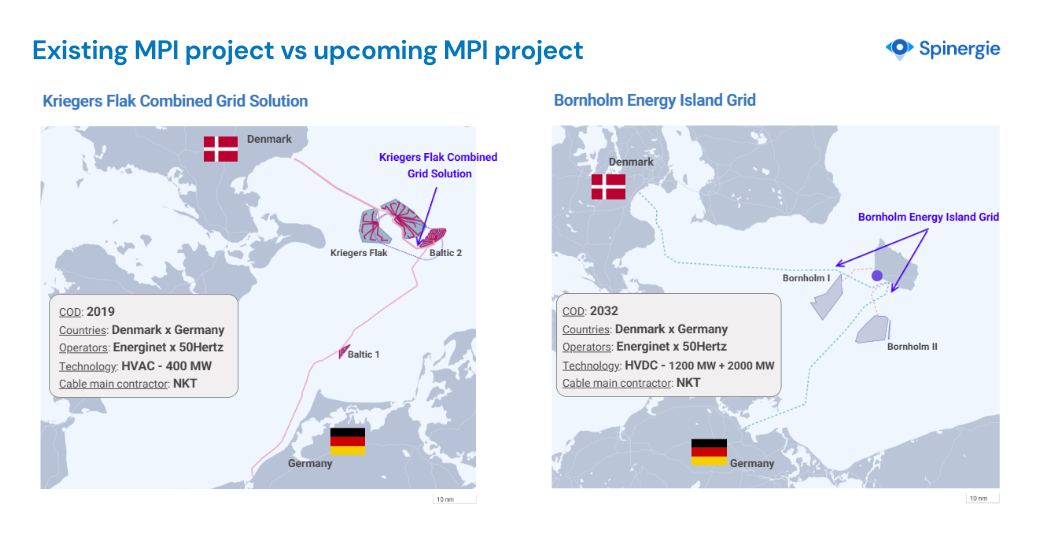
At least seven projects are currently in the pipeline at different stages of development. Five are integrated into offshore energy island projects, offshore hubs designed to aggregate electricity from multiple wind farms and redistribute it to two or more national grids, such as Bornholm Energy Island (DK/DE) and Princess Elisabeth Island (BE).
The pipeline represents over 15 GW of planned cross-border hybrid capacity, with commissioning expected between the early and late 2030s. The GriffinLink project, announced at the January 2026 North Sea Summit, is the latest addition highlighting the continued emergence of new projects.
Acceleration of MPI usage is driven by several factors:
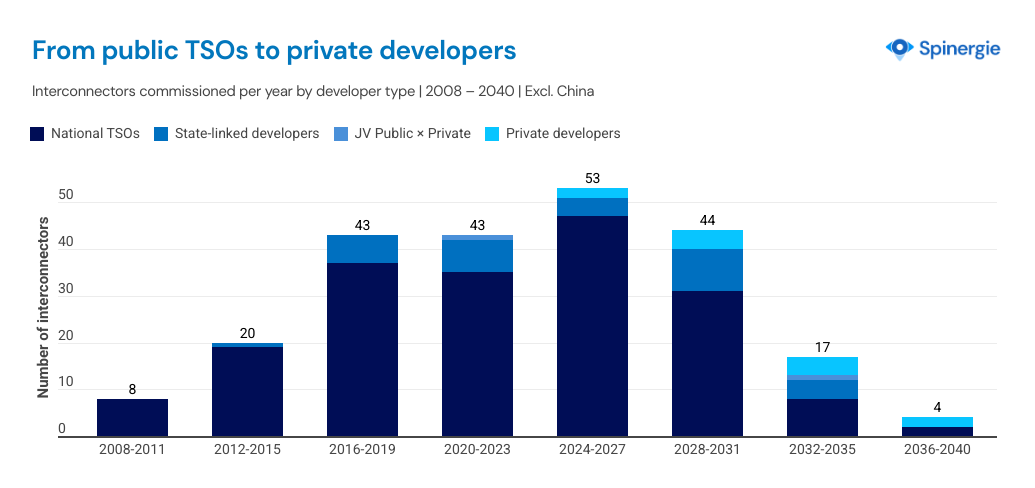
Cross-border interconnectors have traditionally been developed by pairs of national transmission system operators (TSOs) under regulated ownership models (TenneT, Energinet...). Over the past decade, private developers have increasingly entered the market through cap-and-floor (state-linked developer) and merchant structures, with projects such as NeuConnect illustrating that cross-border transmission can attract private capital when regulatory risk and revenue uncertainty are appropriately managed.
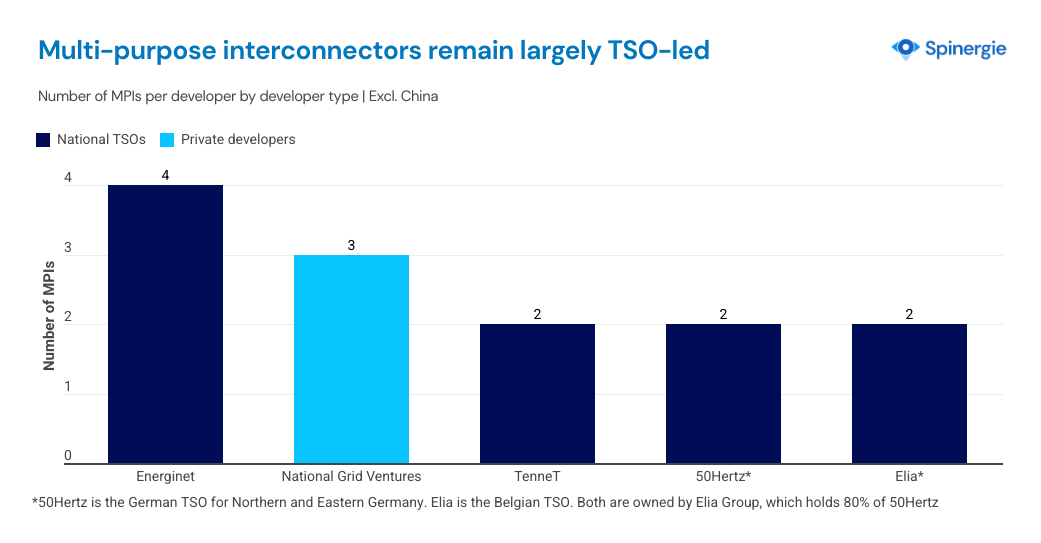
Multi-purpose interconnectors (MPIs), however, remain largely led by TSOs or delivered through TSO-private partnerships. Developers such as National Grid Ventures participate alongside national TSOs in these hybrid arrangements. Unlike conventional interconnectors, MPIs combine electricity transmission and offshore wind grid connection functions within a single asset. This creates open questions around cost allocation and the split of value between offshore generation and cross-border trade.
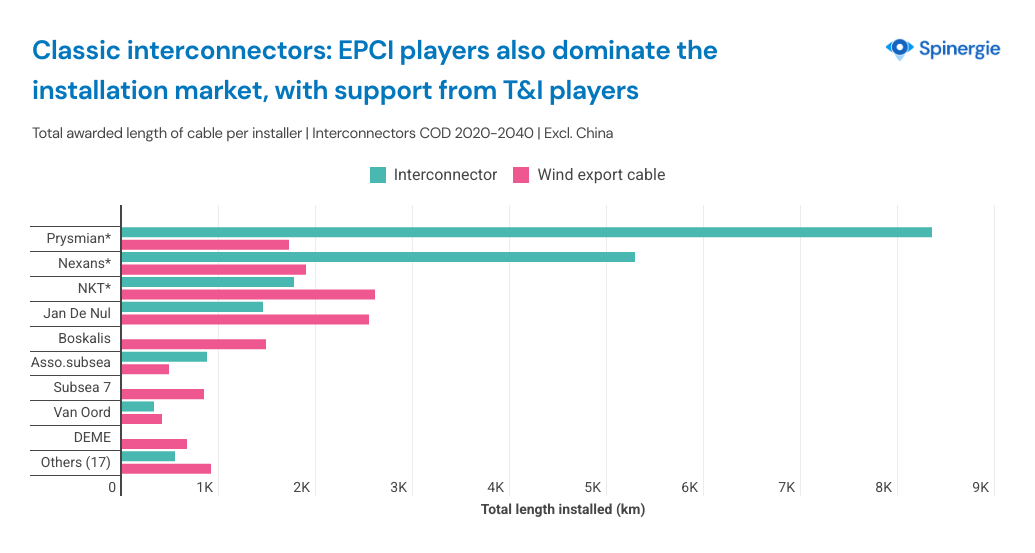
The interconnector and offshore wind export cable markets share a highly similar value chain, with a strong overlap in both manufacturing and installation.
On the manufacturing side, the market is dominated by established European cable suppliers, while Asian manufacturers are progressively entering Europe and are expected to rely on experienced T&I partners for installation.
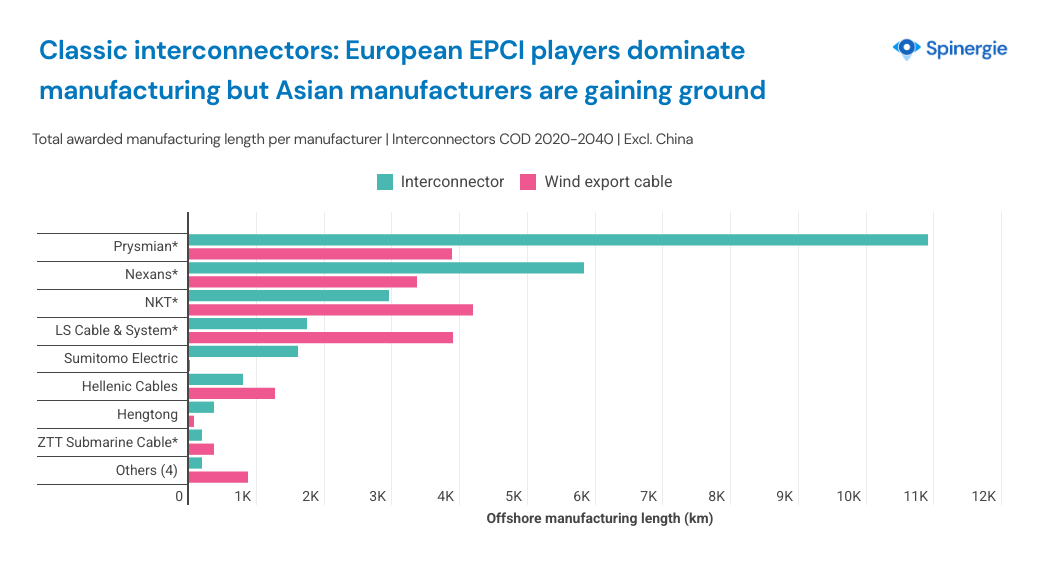
Installation is also concentrated, with the same European EPCI contractors leading the majority of both completed and future projects.
The overlap between the two markets is almost complete, with only a handful of players remaining focused on a single segment, such as Sumitomo in interconnectors and, for the time being, Subsea 7, DEME and Boskalis in offshore wind. The MPI market is expected to follow the same pattern. The first manufacturing and installation contracts are likely to be awarded to the established players already active in interconnectors and offshore wind export cables, as illustrated by NKT's award for the Bornholm Energy Island project.
Our Offshore Power Cable Forecast covers the subsea power cable sector in detail. It quantifies demand for wind array cables, export cables, and interconnectors at global and regional level, benchmarking it against cable-laying vessel supply. With profiles of the global CLV fleet, assessments of manufacturing capacity, and identification of bottlenecks through 2040, the report delivers strategic intelligence for operators and investors navigating this rapidly tightening market. Click here for more information or to buy the report directly.
.jpg)
.jpg)