.png)
Maëlig Gaborieau
,
Senior Offshore Wind Analyst
Author
, Published on
August 18, 2026
No items found.



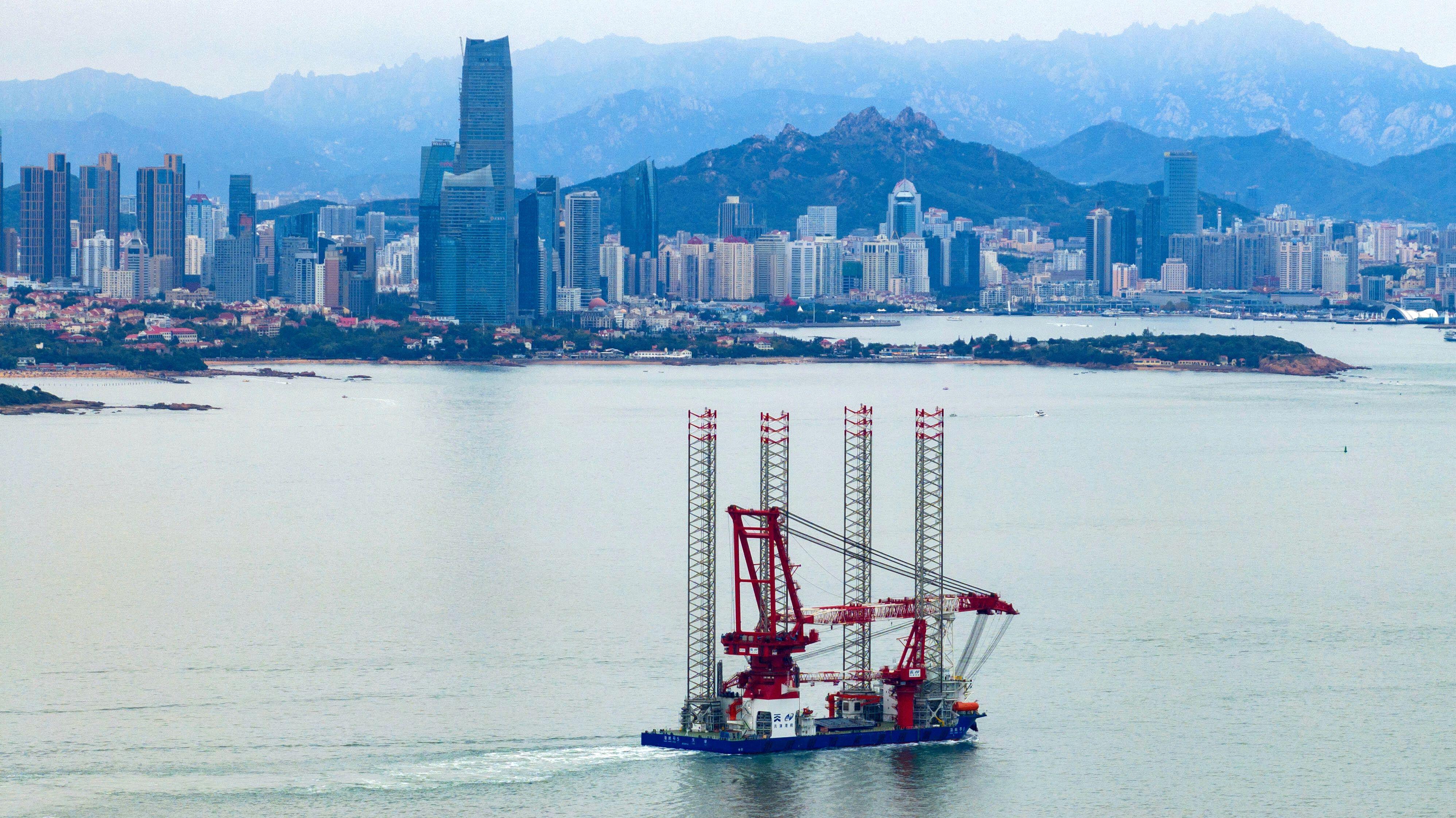
As transport distances double and supply chains globalise, a robust offshore wind logistics strategy is becoming a decisive factor in project delivery success.
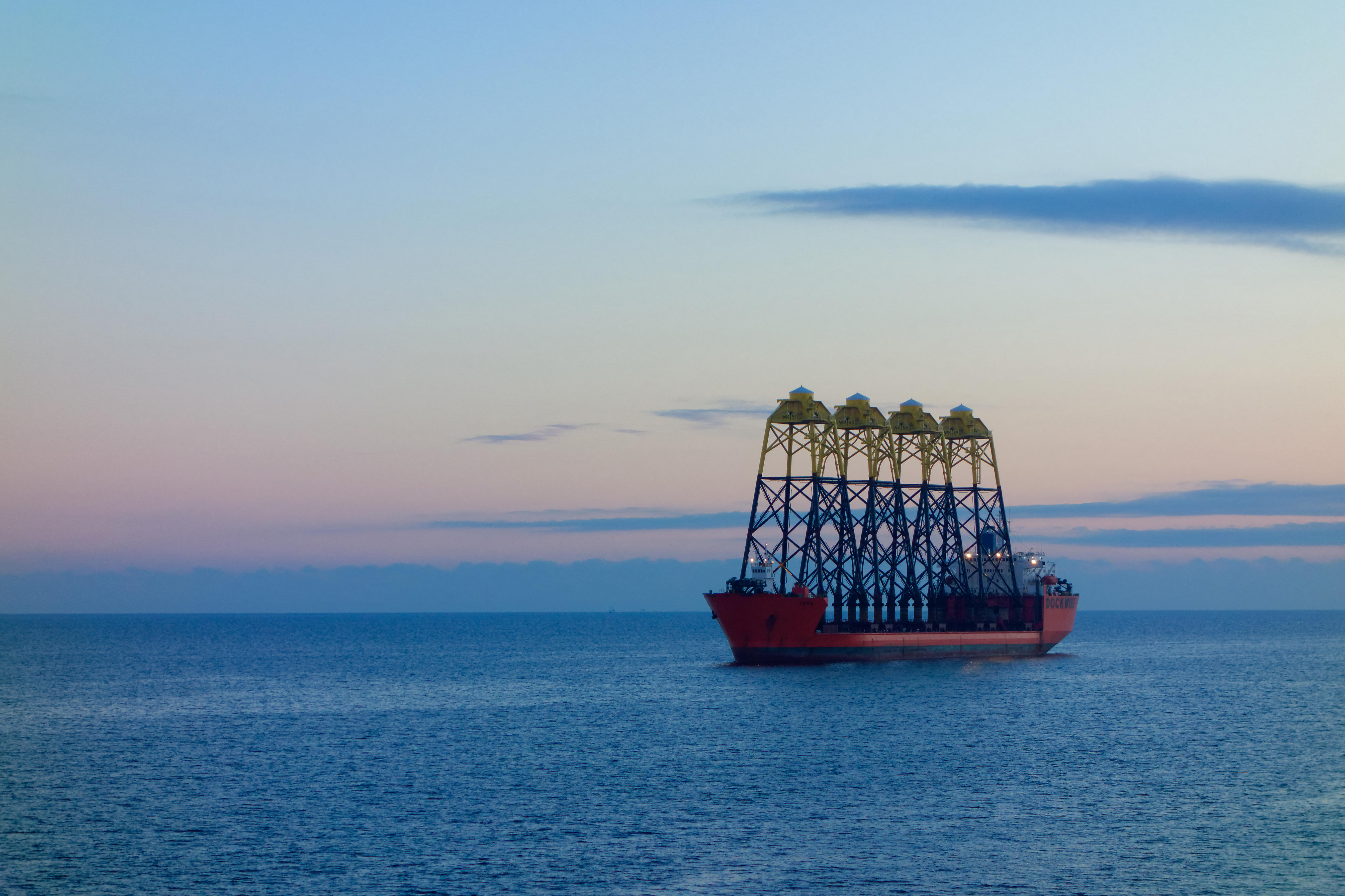
Offshore wind transport logistics supports the execution of offshore wind projects by linking manufacturing, assembly, and installation phases. It governs the movement of large components such as blades, nacelles, and foundations across long distances and constrained port infrastructures.
As installed capacity targets increase, transport volumes and operational frequency rise. At the same time, the geographic distribution of manufacturing hubs and project sites is shifting, with projects located farther from established industrial bases. This trend increases route complexity, vessel demand, and coordination requirements across the supply chain. Transport logistics therefore remains a key enabler of project delivery, with its importance set to increase as spatial imbalances between supply and demand widen.
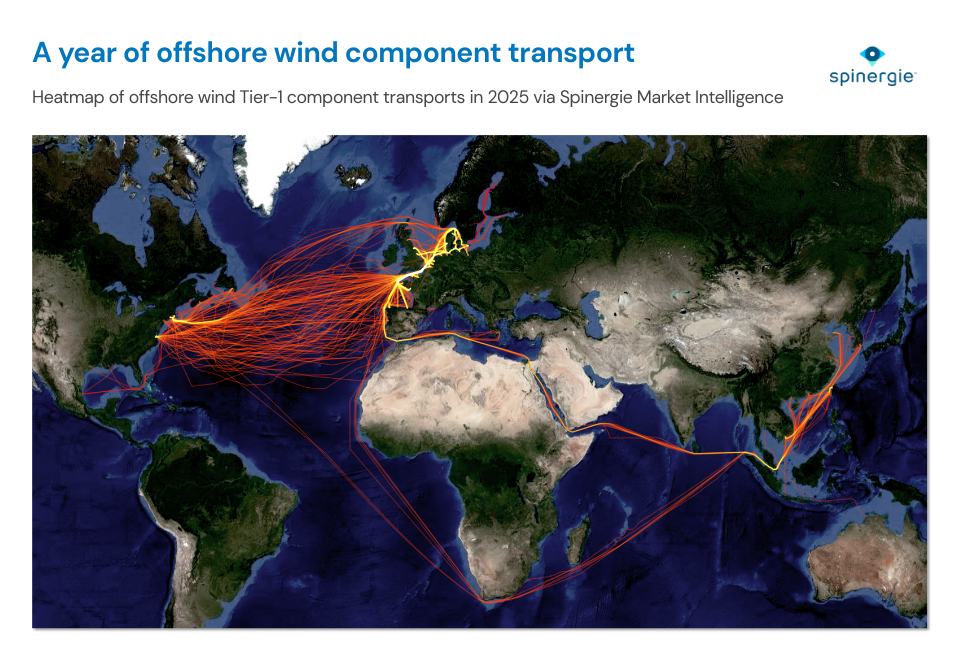
A key trend observed in offshore wind transport logistics is the increase in average transport distance.
Over the past two years, this distance has more than doubled, rising from around 1,000 nautical miles to over 2,300. This shift is driven by evolving supply patterns, with a growing share of components transported from APAC to Europe, particularly monopiles from China, as well as blades and substations.
At the same time, flows from Europe to the United States have supported projects under construction, although this dynamic is expected to ease with the slowdown in U.S. offshore wind activity. These developments indicate a more international supply chain structure, with production and demand increasingly disconnected geographically.
In parallel, transport operators face routing decisions between options such as using the Cape of Good Hope and the Suez Canal for Asia–Europe flows. As a result, transport operations involve longer voyages, higher coordination requirements, and increased exposure to operational risks.
There are three main options available for the transportation of offshore wind components.
Anchor Handling Tug Supply (AHTS) are multipurpose vessels designed to handle anchors, tow floating assets, and support offshore operations.
For short-distance transport, they are used to tow barges carrying large offshore wind components, under moderate weather conditions. This configuration is frequently observed in Northern Europe, where it provides a flexible and cost-efficient solution for regional transport.
General cargo vessels are multipurpose ships designed to transport a wide range of goods, including offshore wind components and small structures. Suitable for light to medium sized components, these vessels are typically used for medium to long distances, offering flexibility in cargo configuration and port access. The offshore wind industry accounts for only a small portion of the use of these vessels.
This solution is common across intraregional and interregional routes, where standard port infrastructure can accommodate these vessels.
Heavy load carriers are specialised vessels designed to transport oversized and high-weight components such as foundations, substations, and large installation equipment. They are equipped with advanced lifting systems or submersible decks to handle complex loading operations.
These vessels are used for long-distance transport, particularly on intercontinental routes, where cargo size and weight exceed standard shipping capabilities.
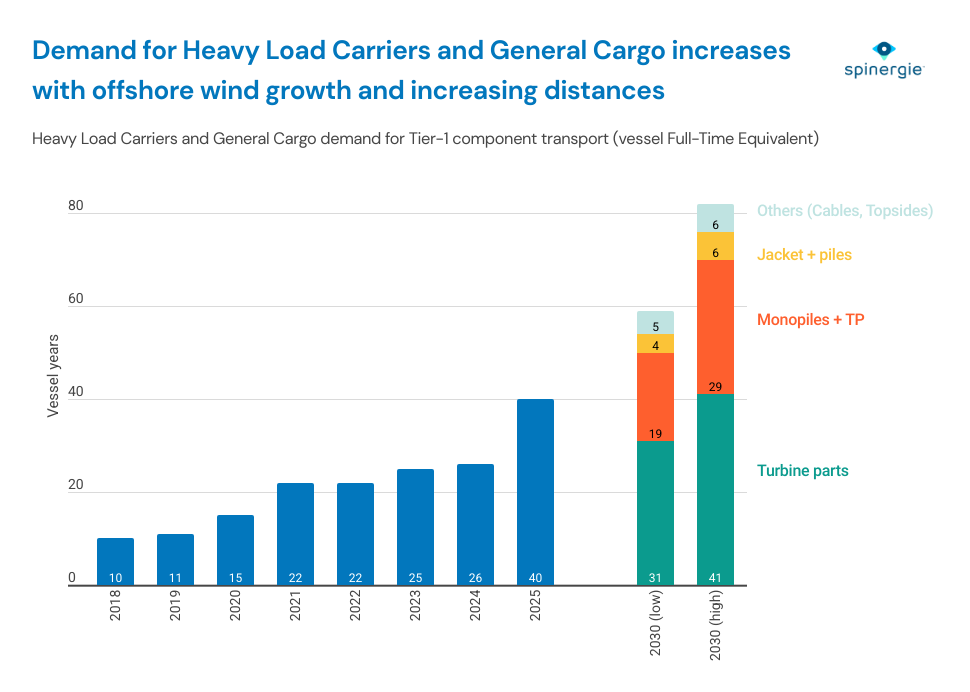
Demand for Heavy Load Carriers and General Cargo increases with offshore wind growth and increasing distances
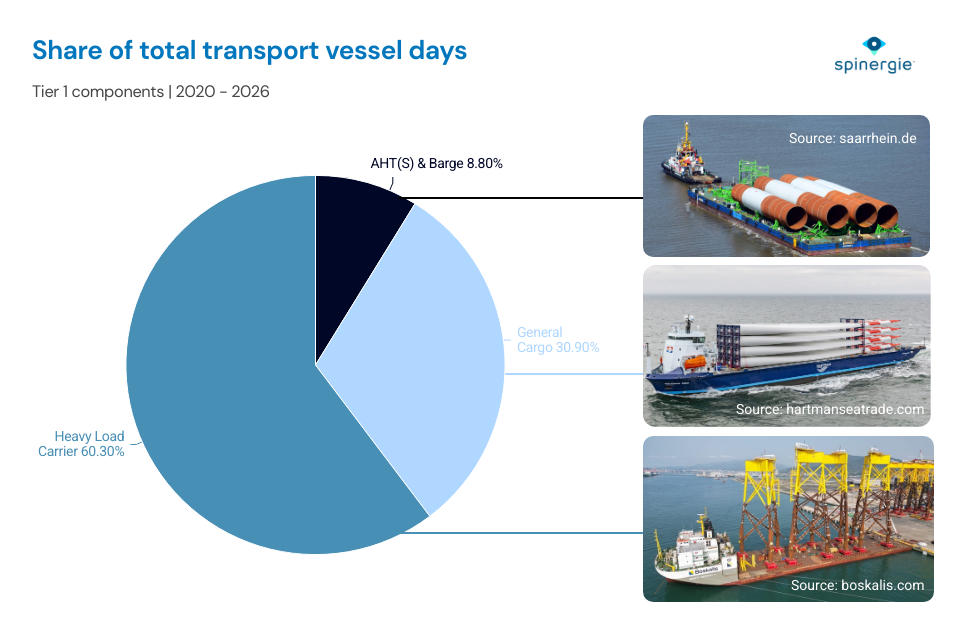
The structure of the offshore wind transport market today relies on heavy load carriers and general cargo vessels, which serve a wide range of industries, with offshore wind representing only a limited share of their overall activity.
However, for offshore wind, these vessels are expected to face increasing demand in the coming years. One key driver is the rise in long-distance transport: in 2021, around a quarter of trips exceeded 1,000 nautical miles, while by 2025 this share approaches half of total demand. This shift reflects changes in sourcing strategies and has a direct impact on vessel requirements. As offshore wind capacity expands and transport distances increase, demand for these vessel types grows accordingly.
To assess this evolution, two scenarios can be defined based on sourcing patterns.
In both cases, vessel demand increases, with the high scenario exceeding 80 vessel years by 2030, driven by turbine and monopile transport. This gap between scenarios highlights the role of sourcing strategies, where longer supply chains directly increase transport demand and vessel requirements.
As offshore wind scales and supply chains stretch further across the globe, transport logistics will only increase in importance. Sourcing decisions made today carry direct consequences for vessel demand, route complexity, and ultimately, project delivery timelines.
The gap between stable and globalised supply chain scenarios is telling: both lead to growing vessel demand, but the path there looks very different. For developers, operators, and logistics teams, understanding these dynamics is critical to building strategies that are resilient, cost-efficient, and ready for the capacity targets ahead.
For further analysis, watch our webinar, ‘Offshore Wind Component Transportation: Vessel Demand & Strategic Shifts Towards 2035’, or request a demo to see how Spinergie Market Intelligence can support your logistics planning.