.png)
Hélia Briaud
,
Subsea Cable Analyst
Author
, Published on
August 18, 2026
No items found.



Offshore wind rock installation trends reveal how foundation design and regional conditions drive significant variation in scour protection campaigns and what that means for RIV demand through 2029.
From scour protection around monopile foundations to cable route stabilisation, Rock Installation Vessels (RIVs) are crucial to securing the physical integrity of offshore wind farm and interconnector projects. With total demand forecast to exceed 4,200 vessel days in 2029, the market is tightening. Here, Spinergie’s Subsea Cable analyst, Hélia Briaud, examines recent trends with a look towards future vessel demand.
There are two main uses for RIVs in the wind or interconnector operations: scour protection around offshore wind foundations, and rock protection for cables.
Rocks are installed around the foundations of offshore wind turbines and offshore substations in order to prevent scouring—seabed erosion caused by waves and currents. Without protection, the flow acceleration around monopiles or jacket structures can remove surrounding sediments and potentially compromise foundation stability over time. Rock placement is the most common mitigation method.
Rock protection is applied along certain sections of offshore export and interconnector cables to provide mechanical stability and prevent exposure where burial depth cannot be fully achieved or maintained. In areas with strong currents, uneven seabed conditions, or crossing points, rock installation helps secure the cable in place, reduces the risk of free spans, and protects it from external damage. This differs from rock bags or mattresses, which are usually more localised protective measures.
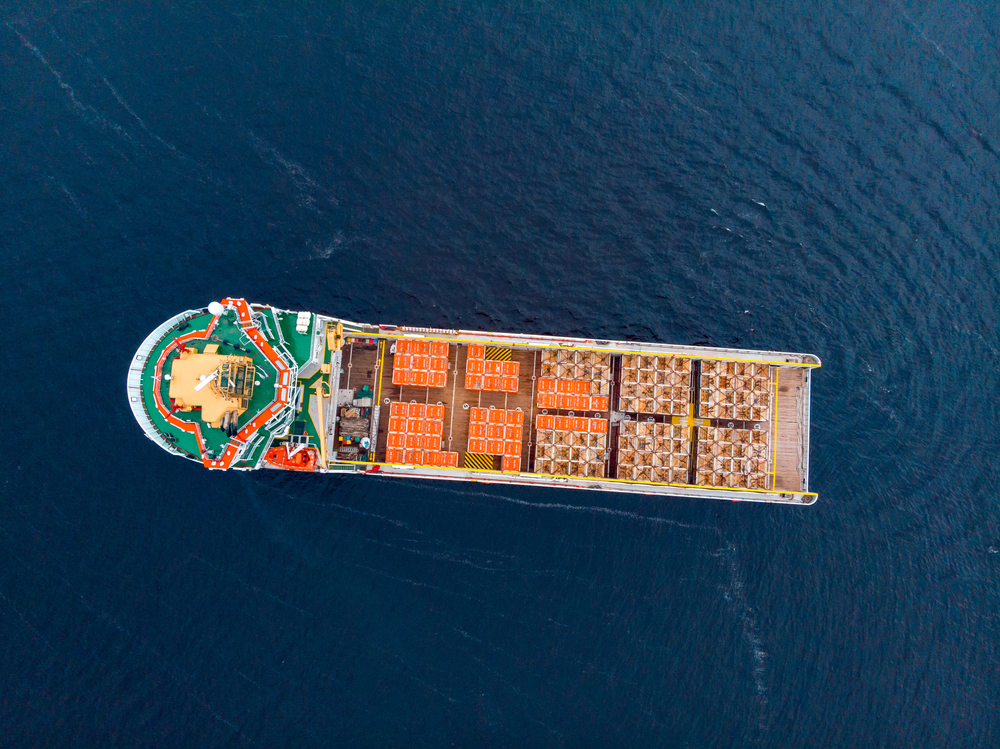
Historically, the RIV fleet mainly consisted of side stone dumping vessels that were designed for operations in ports, reinforced deck areas, and for shallow water works.
Fall pipe vessels emerged in the mid-1980s before taking increased prominence as offshore projects moved into deeper waters. Today, this segment represents approximately 82% of the active RIV fleet. These vessels transport rocks of various sizes and install them with high precision, using a fall pipe system equipped with a Remotely Operated Vehicle (ROV). Thanks to advanced dynamic positioning (DP) systems, modern fall pipe vessels can operate in water depths up to 2,000 metres, making them essential for today’s offshore projects.
Before and during offshore rock installation campaigns, vessels must regularly load rock material. This can be done at port quays, where materials have been transported from inland quarries. Alternatively, it can be undertaken directly at coastal quarries that are equipped with direct vessel loading infrastructure.
Interested in tracking these activities? Spinergie tracks the quarries used by RIVs for offshore projects. Request a demo to find out more.
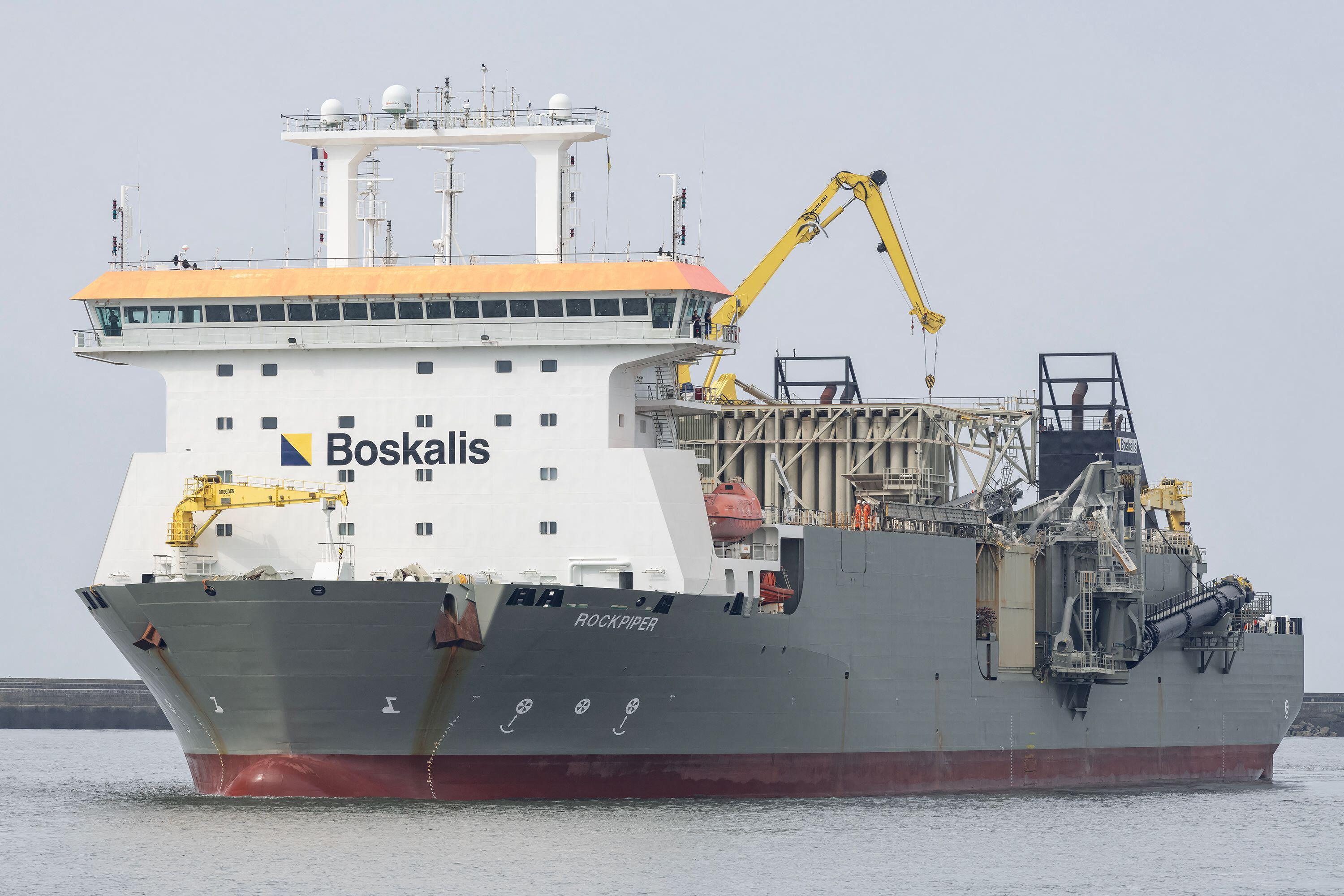
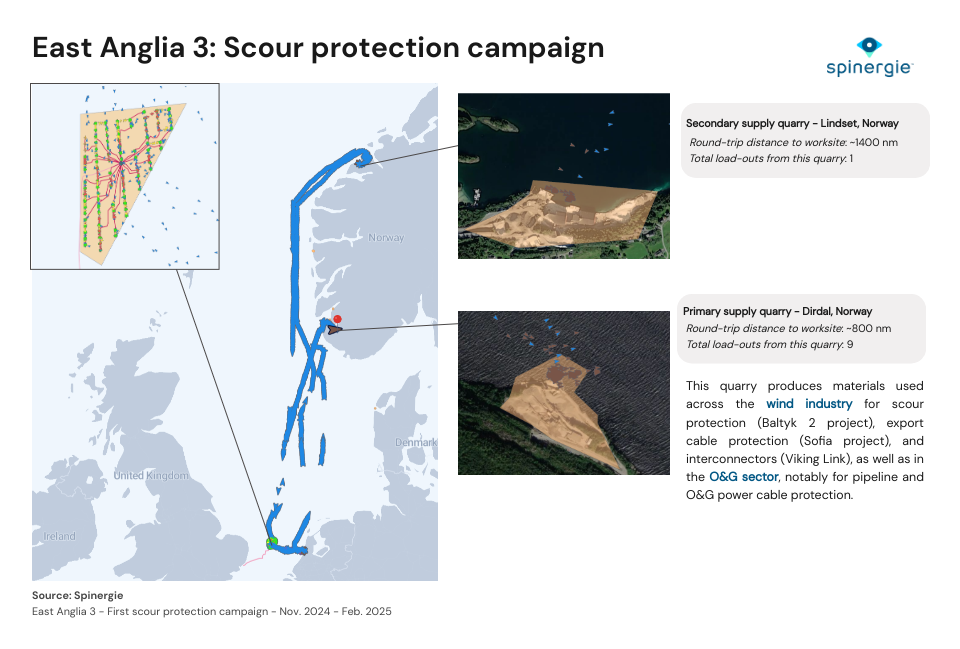
During the first scour protection campaign for the UK’s East Anglia 3 offshore wind farm (which lasted from November 2024 to February 2025, Boskalis’ RIV ROCKPIPER sourced material from at least two different Norwegian quarries.
ROCKPIPER made nine calls at a quarry near Dirdal, which was considered the project’s main supply source. Each round trip represented more than 800 nautical miles—approximately four days at sea. The vessel also made one call at a more northern quarry near Lindset, which was a round trip of over 1,400 nautical miles. In total, at least 10 load-outs were required to complete the scour protection for 89 of the 95 turbines installed on the project.
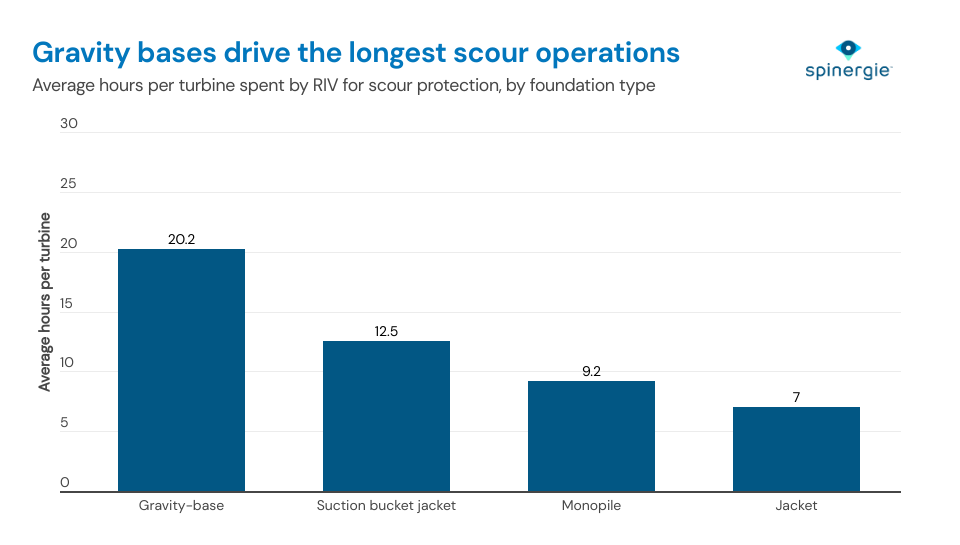
More than 60% of wind farms commissioned between 2020 and 2025 required scour protection, making it a standard part of offshore wind foundation installation. However, the process itself is anything but standard as the duration of sour protection operations varies significantly depending on foundation design and regional conditions.
Gravity base foundations require nearly twice as much time per turbine—these operations average 20 hours compared to the nine hours for other designs. This can largely be attributed to their wider seabed footprint, which increases the potential scour area, and therefore the volume of rock required. The larger protection diameter and thicker rock layers mechanically translate into longer installation campaigns.
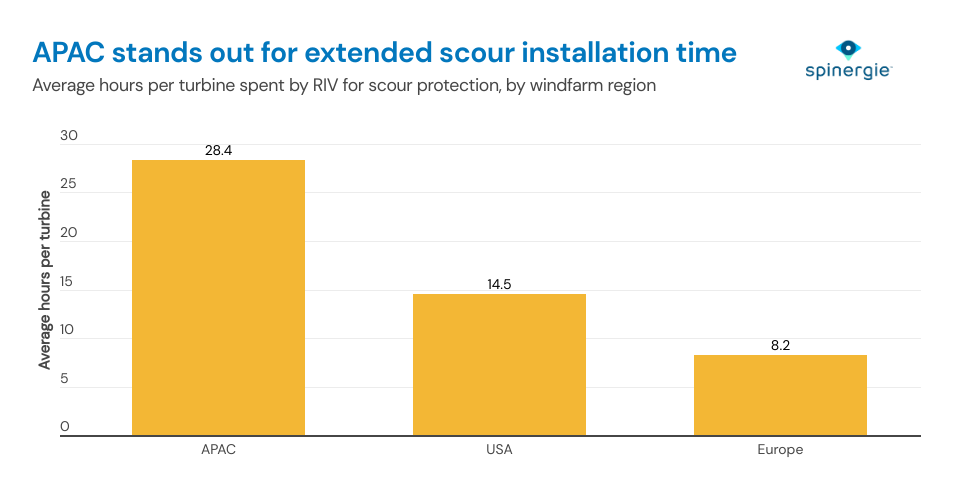
Regional differences are even more pronounced. Average time per turbine is roughly four times higher in APAC, and nearly twice as high in the USA, when compared to Europe. This likely reflects a combination of sandy seabed conditions, which are more prone to sediment mobility, and high-energy hydrodynamic environments, including typhoon and hurricane-prone regions. These factors typically require more extensive rock placement to ensure long-term stability.
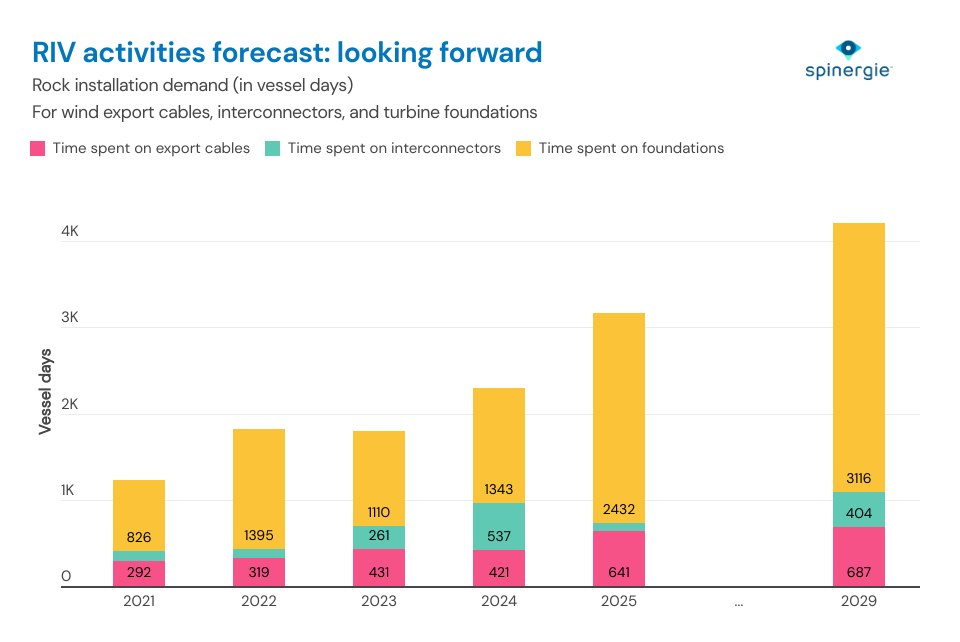
Total RIV demand is expected to reach 4,207 vessel days in 2029. This is when only considering turbine foundation and wind export cable demand for wind farms deemed feasible in Spinergie’s Offshore Wind Installation Forecast. It assumes performance rates of 0.3 vessel days per kilometre of export cable, 0.1 vessel days per kilometre of interconnector, and 1.7 vessel days per turbine foundation.
Scour protection on foundations represents approximately 66% of total rock installation activity in the wind industry—a share that is expected to remain stable.
Since 2022, the fleet’s average annual effective utilisation has stood at 67%. While demand continues to increase, fleet capacity has also evolved, with four new vessels delivered between 2024 and 2025. There are also five additional units currently under construction.
For now, the fleet remains predominantly European, with only one vessel - Great Lakes Dredge and Docks’ Arcadia - based in the United States. As demand grows across multiple regions, particularly in APAC, this geographic concentration could lead to greater cross-regional mobilisations and localised capacity constraints.
Our Rock Installation Vessel Report provides detailed analysis and commentary on the global market. It focuses on fleet analysis, capacity outlook, as well as key trends and RIV demand dynamics, with forecasts through 2030. Click here to find out more, and buy the report directly from Spinergie.
.jpg)