.png)
Maëlig Gaborieau
,
Senior Offshore Wind Analyst
Author
, Published on
April 20, 2026
No items found.



With average transport distances more than doubling in two years and component sizes surging, offshore wind's global supply chain is under mounting pressure to adapt.
.jpg)
Annually commissioned offshore wind capacity is expected to more than quadruple by 2030, with annual installations reaching around 12.3 GW by the end of the decade and Europe continuing to be the main driver.
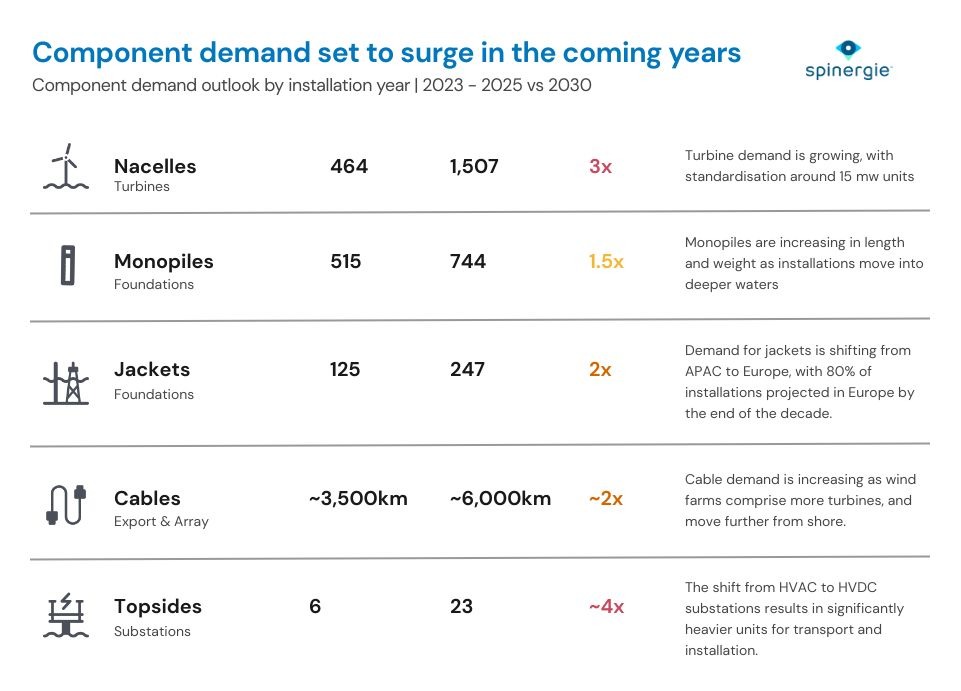
This growth has direct implications for the supply chain as higher installed capacity means a significant increase in the number of components to both produce and transport. For some components, the demand uptick will increase by 1.5 to 3 times more than recent levels—nacelles are showing the strongest growth. Volume is not the only consideration with turbine sizes also growing to standardise around 15 MW. This directly impacts the size of all associated components.
Foundations and jackets are a key example of components that need to size up, as they not only need to support larger turbines, but also be suitable for use in increasingly deeper waters. They also demonstrate that, while the supply chain must grow to accommodate larger component sizes, the transportation sector must also adapt to these longer, heavier, and more complex structures.
Likewise, for offshore substations, the shift from HVAC to HVDC has changed the landscape. These topsides are significantly heavier, which adds new transportation constraints. Essentially, every component type is increasing in number and size, and this will inevitably lead to direct pressure on logistics and transport capacity.
Beyond the size and volume of growing components, is the increase in transport distances. The average transport distance for offshore wind components has more than doubled in just two years, going from around 1,000 nautical miles to over 2,000. This is primarily due to changes in supply patterns—more components, including monopiles, blades, and substations, are being transported from APAC to Europe.
There has also been a strong increase in flows from Europe to the U.S. to support under construction projects. However, this flow will ease in the coming years as offshore wind development in the U.S. is paused.
The overall theme is clear: supply chains are becoming more international, and transport distances are increasing. This means longer voyages, more complex logistics, and higher exposure to risks during transport.
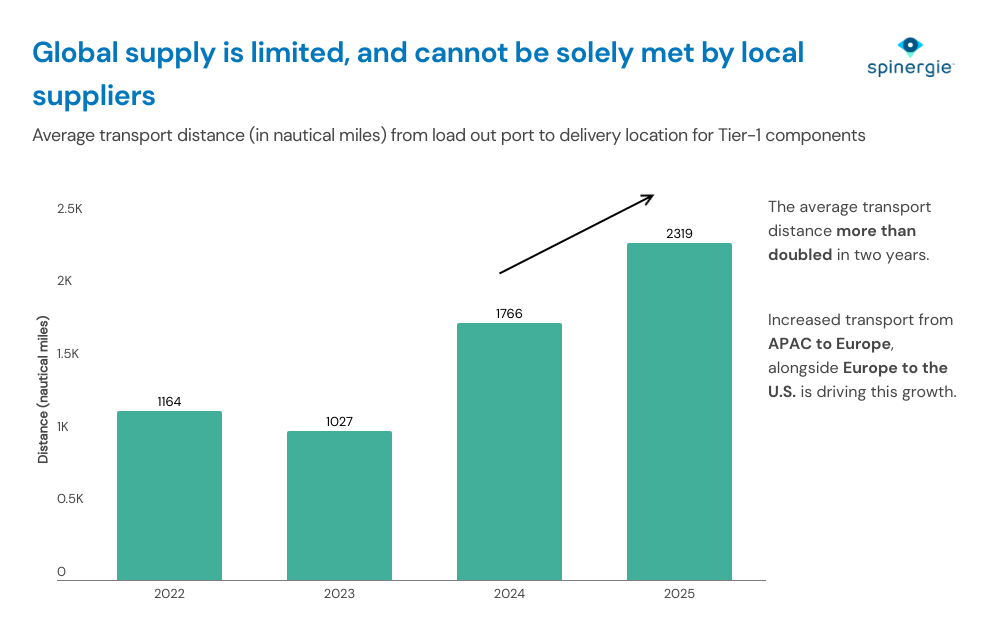
With longer supply chains, transport routing decisions need to be especially well considered for moving components from APAC to Europe. There are two main options: passage via the Cape of Good Hope, or the Suez Canal, each with pros and cons.
The Cape of Good Hope route takes around 50 days. This is a significant duration with the longer distances also opening up exposure to operational risks and uncertainty. However, the expense of canal fees are avoided.
On the other hand, the Suez Canal has a transit duration around 20% shorter, at around 40 days. Yet, this shorter duration is counterbalanced by transit fees that are typically between $200,000-500,000, depending on vessel size and cargo. Beyond this cost, the region comes with its own risks. Geopolitical tensions can disrupt traffic, and delays can have significant consequences as evidenced with the Ever Given cargo ship blockage in 2021.
Choosing a suitable route becomes a trade-off between cost, duration, and risk.
There are three points of consideration regarding the structure of global offshore wind transport flows.
Europe remains the main driver of Tier 1 component transport, as most demand is still concentrated in Northern Europe.
The U.S. saw a period of high activity with several projects under project simultaneously driving a large number of transatlantic transports. However, as mentioned previously, this is a temporary effect. Yet it also highlights a structural challenge for the U.S., and other frontier markets: with a lack of domestic manufacturing capacity they will continue to depend on imports, primarily from Europe.
A lack of domestic supply is likely to also impact frontier markets like Brazil, Colombia, Australia, Canada, and Southeast Asia. Therefore, long-distance imports will become increasingly frequent as these markets grow. This brings opportunity for transport players operating heavy load carriers (HLCs) and general cargo vessels.
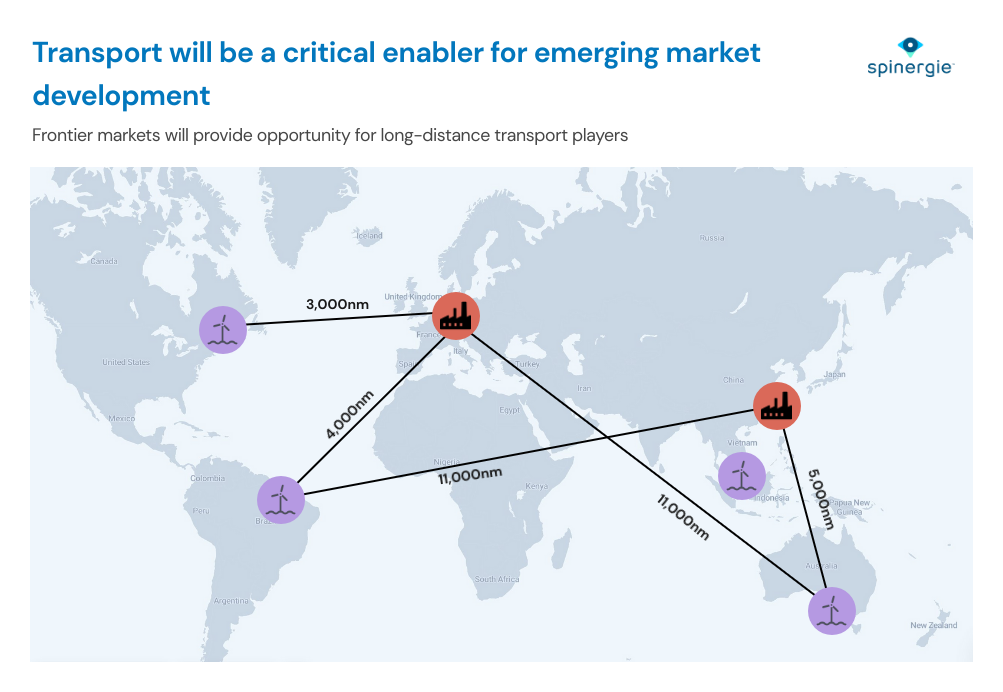
Flows are increasing from APAC to Europe. As many of these transports go via the Suez Canal, it reinforces the importance of long-distance logistics. It makes project delivery more complex, with longer supply chains and higher exposure to logistics constraints.
Ultimately, the globalisation of offshore wind supply chains is becoming increasingly visible. While regional hubs remain vital, intercontinental flows are surging, which positions transportation as the central connecting element. This rising demand presents a significant opportunity for the HLC sector, provided the industry can navigate tightening vessel availability and the logistical complexities of serving emerging markets that lack domestic manufacturing.
Spinergie tracks the offshore wind supply chain within its Market Intelligence solution including transportation analysis. In-depth market intel is the key to helping your team better understand the impact of their choices through analysis of previous projects. Find out how by requesting a demo today.